






A new insurance agency builds trust online from day one by proving it is real, licensed, and easy to reach before a prospect ever calls. That means a secure, professional website with license details and real agent bios, a verified Google Business Profile, honest reviews from your first clients, and helpful content that answers buyers' questions in plain language.
Every established agency in your town has something you don't yet: history. Years of reviews, a recognizable name, and a referral network. When you open a new agency, you are asking strangers to trust you with their home, their car, and their family's financial security without that track record.
The good news is that buyers now form their first impression online, so a new agency can close the trust gap faster than ever. According to the J.D. Power 2026 U.S. Insurance Digital Experience Study, 47% of new auto and home insurance policies are now bought digitally. Your online presence is doing most of the trust-building before you ever say hello.
Insurance is a promise to pay at the worst moment of someone's life. Before requesting a quote, prospects quietly ask three questions: Is this agency real? Is it licensed? Will it be there when I file a claim? A new agency has to answer all three online, often without a single review to lean on.
Search engines and AI tools ask similar questions. Google's guidance on creating helpful, reliable content places trust at the center of experience, expertise, authoritativeness, and trustworthiness (E-E-A-T), especially for topics that affect people's finances. AI assistants such as ChatGPT and Google's AI Overviews raise the stakes further, because they tend to recommend businesses with clear, consistent, verifiable information across the web.
Your website is your office lobby. It should load quickly on a phone, use HTTPS, clearly list the lines you write and the areas you serve, show your phone number on every page, and include a quote form that actually works. Clarity matters as much as design: J.D. Power found satisfaction with insurance websites declined in 2026 because many customers couldn't find the information they wanted. A purpose-built insurance agency website with real coverage pages, not a stock-photo template, signals a serious business from the first click.
Licensing is the fastest trust signal a new agency has, so do not hide it. List your license numbers and licensed states on your About page or footer, along with the carriers you are appointed with (following each carrier's logo rules) and your professional associations. Consumers can confirm a license through their state insurance department, and making that check easy shows you have nothing to hide. Review your state's advertising rules for required disclosures, too.
Your agency may be new, but your experience probably is not. Build an About page with real photos, short bios, years in the industry, and designations such as CIC or CPCU. Explain why you started the agency and who you serve best. Add author bylines with credentials to every blog post, since named, qualified authors are one of the clearest expertise signals for readers and search engines alike.
For many local shoppers, your Google Business Profile is the first thing they see. Verify it on day one, choose an accurate primary category, and add hours, service area, products, and real team photos. Follow Google's guidelines for representing your business, including using your real business name without extra keywords. Then keep your name, address, and phone number identical across Bing Places, Apple Business Connect, Yelp, and the BBB. Consistent listings support insurance agency SEO and help AI tools confirm you are legitimate.
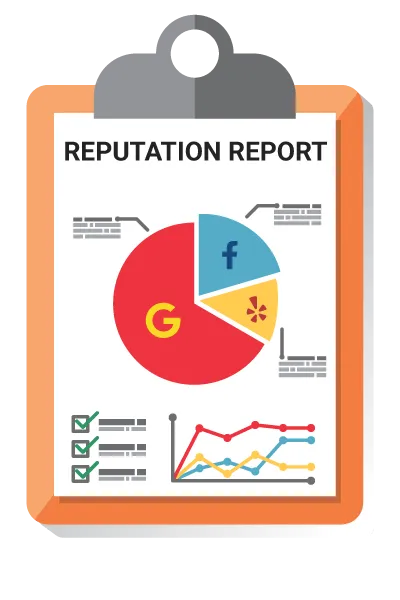
Reviews are the social proof a new agency most lacks, and shoppers notice how recent they are, not just how many. A steady flow of fresh reviews beats a one-time launch burst. Ask for a review after every policy bind, with a direct link that makes it a 30-second task, and reply to every review personally.
Never cut corners. The FTC's final rule on fake reviews and testimonials bans fake reviews (including AI-generated ones), buying positive reviews, and undisclosed insider reviews, and it allows the agency to seek civil penalties. A reputation management program keeps this process consistent as you grow.
Content is how a new agency proves expertise before it has a long client list. Write coverage pages and blog posts that answer the questions you hear every week, leading each answer with a clear, direct sentence before the details. This format helps you earn featured snippets and makes your pages easy for AI assistants to cite. Pair content marketing with AI search optimization, and see our guide on whether your insurance website is AI-readable.
Nothing erodes trust faster than an unanswered question. Use click-to-call buttons, short forms, and a clear response-time promise you actually keep. Since prospects often research coverage after hours, an AI chatbot built for insurance agencies can answer common questions, capture leads, and hand them off to a person. J.D. Power found chatbots improve the shopping experience, yet only 11% of insurance shoppers used them, so make yours visible and genuinely useful.
Insurance shoppers share sensitive information, from driver's license numbers to home details. Publish a clear privacy policy, secure every form, and manage cookie consent properly. Our checklist on whether your insurance agency website is compliant covers the essentials, and consent management services can handle cookies for you.
Some shortcuts quietly damage credibility. Buying reviews or followers, or asking friends to post reviews, can violate federal rules. Claims like “lowest rates guaranteed” invite skepticism and may conflict with state advertising rules. Inconsistent listings confuse Google and AI assistants, and abandoned social profiles suggest an agency that has lost interest. Pick fewer channels, keep them current, and back up every claim.
Trust shows up in your data. Track review count, average rating, and review recency. Watch calls and website clicks in your Google Business Profile, and monitor branded searches for your agency's name in Google Search Console. If traffic grows but quote requests do not, visitors may still be missing key trust signals. Benchmark your reviews against local competitors with our free reputation checker tool.
A new insurance agency doesn’t need a decade of history to earn trust online. It needs to prove, clearly and consistently, that it is licensed, reachable, and focused on helping clients make better coverage decisions. Get the foundations right from day one: a professional website, a verified Google Business Profile, honest reviews, and helpful content. Then trust will build with every client you serve.
Stratosphere helps new and growing insurance agencies build that foundation, from websites and local listings to reviews, content, and AI search visibility. Call (714) 455-3267, email info@joinstratosphere.com, or schedule a free growth strategy session to get your agency off to a credible start.
A new agency should never post or buy reviews before it has real clients, since the FTC bans fake and undisclosed insider reviews. Until reviews arrive, build trust with visible licensing, real agent bios, and helpful content, then ask every new client for an honest review once their policy binds.
It should include HTTPS security, mobile-friendly design, clear coverage pages, license numbers and licensed states, carrier appointments, real team photos and bios, a working quote form, a visible phone number, and a privacy policy.
There is no fixed timeline. You can have a complete website, a verified Google Business Profile, and visible licensing in place within weeks, while a meaningful review base and search visibility usually build over several months of consistent effort.
Yes. A home-based agency can list itself as a service-area business and hide its street address while still showing its service area, hours, reviews, and contact details.
AI search tools tend to favor agencies with consistent business information, recent positive reviews, and clear, expert content that directly answers common questions. No one can guarantee an AI recommendation, but strengthening these signals improves your chances of being cited. Learn more about AI search optimization for insurance agents.